Shenzhen Flower Show 2024, China
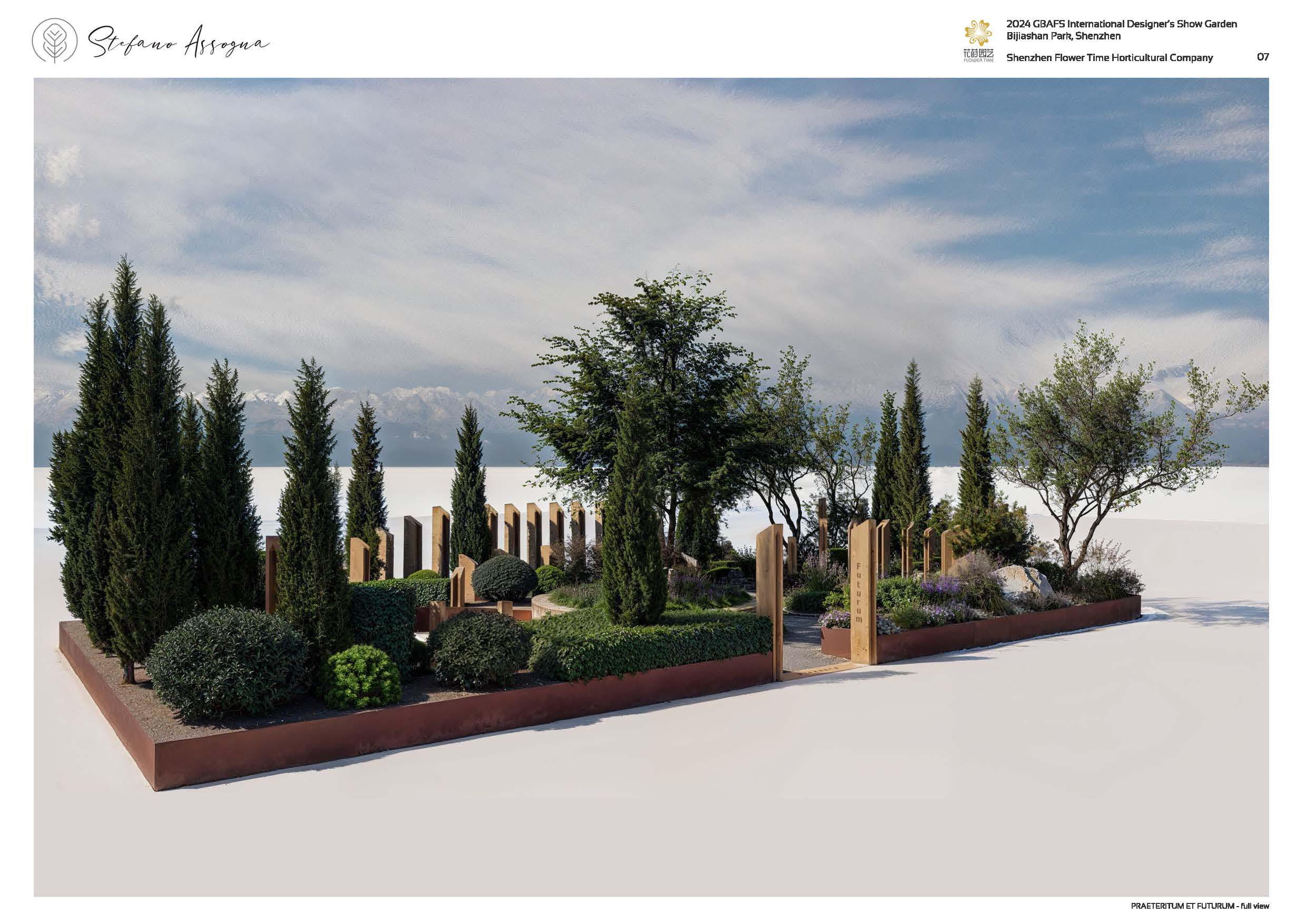
Praeteritum et Futurum: a journey through time between the city's memory and the becoming of nature.
Selected by the Chinese organization for the prestigious Shenzhen Flower Show 2024, we presented a project aimed at redefining the concept of the Italian garden.
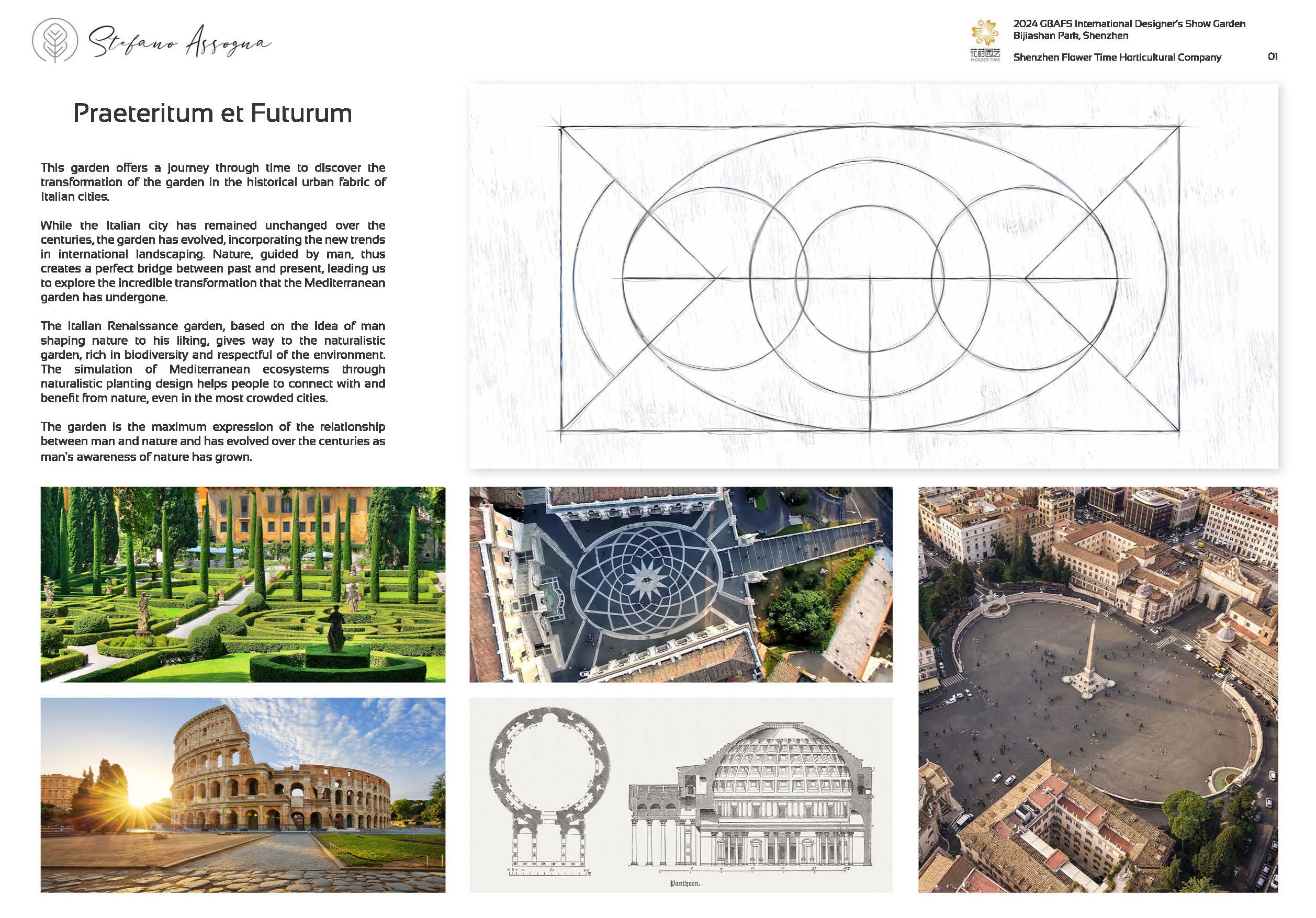
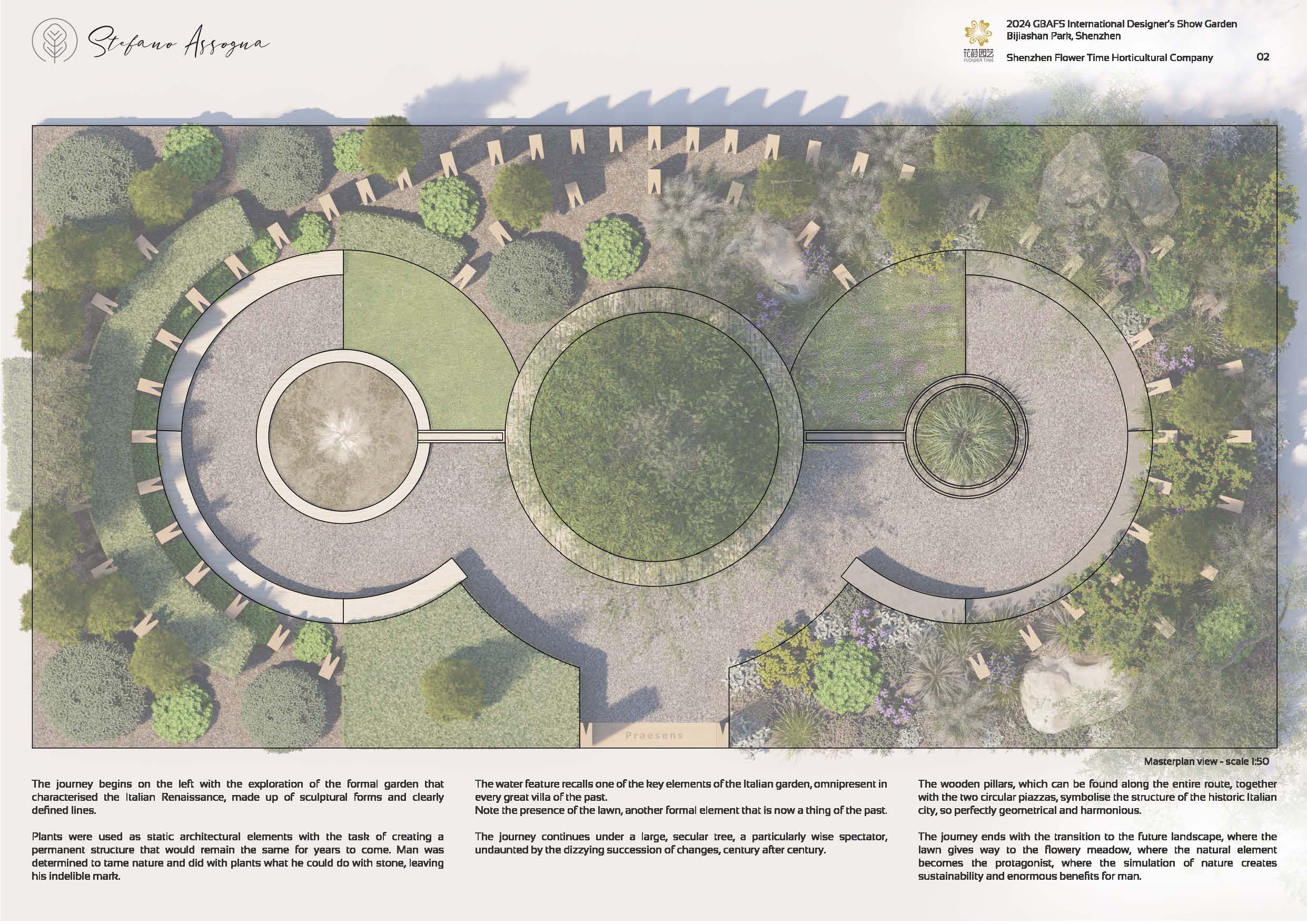
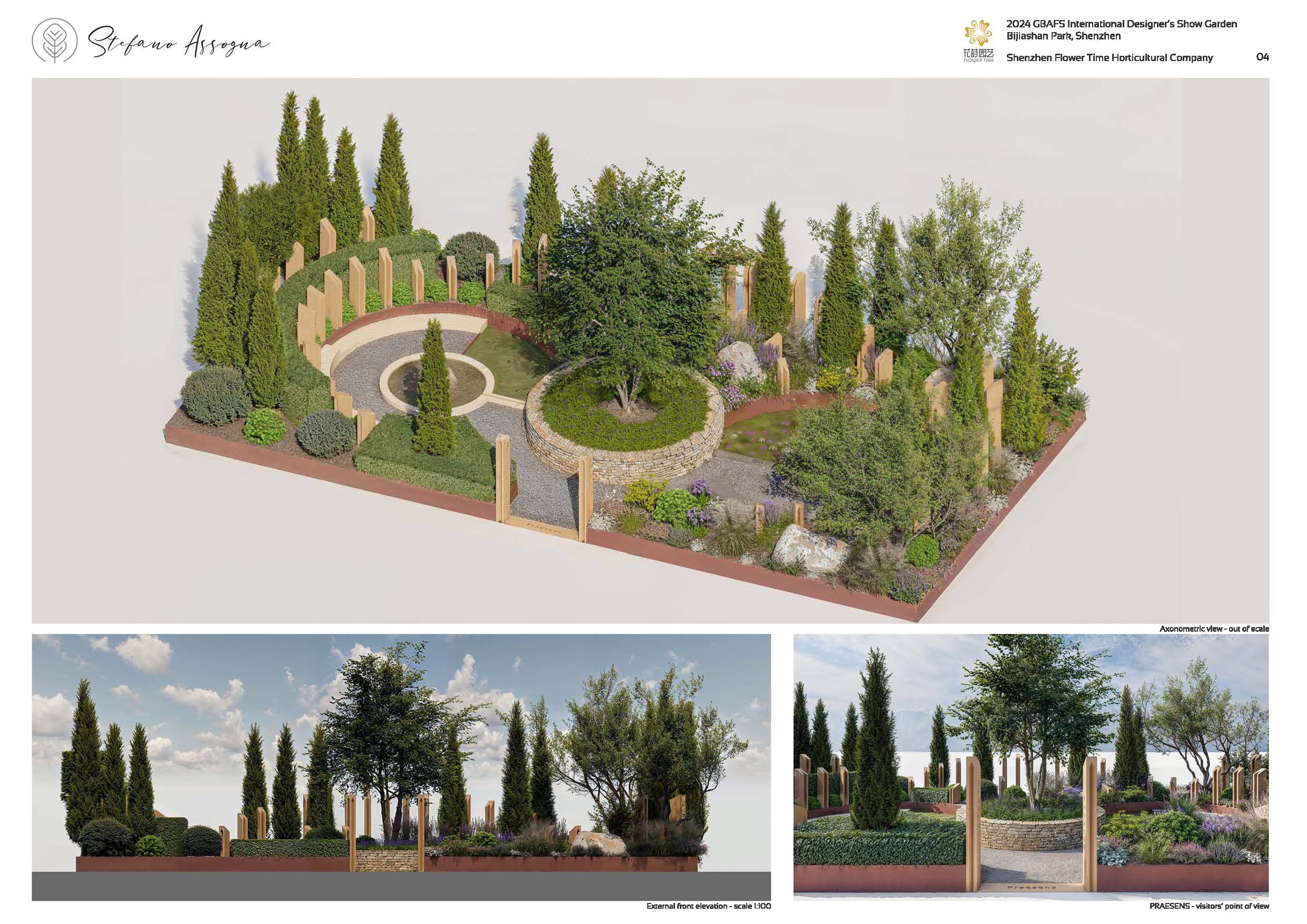
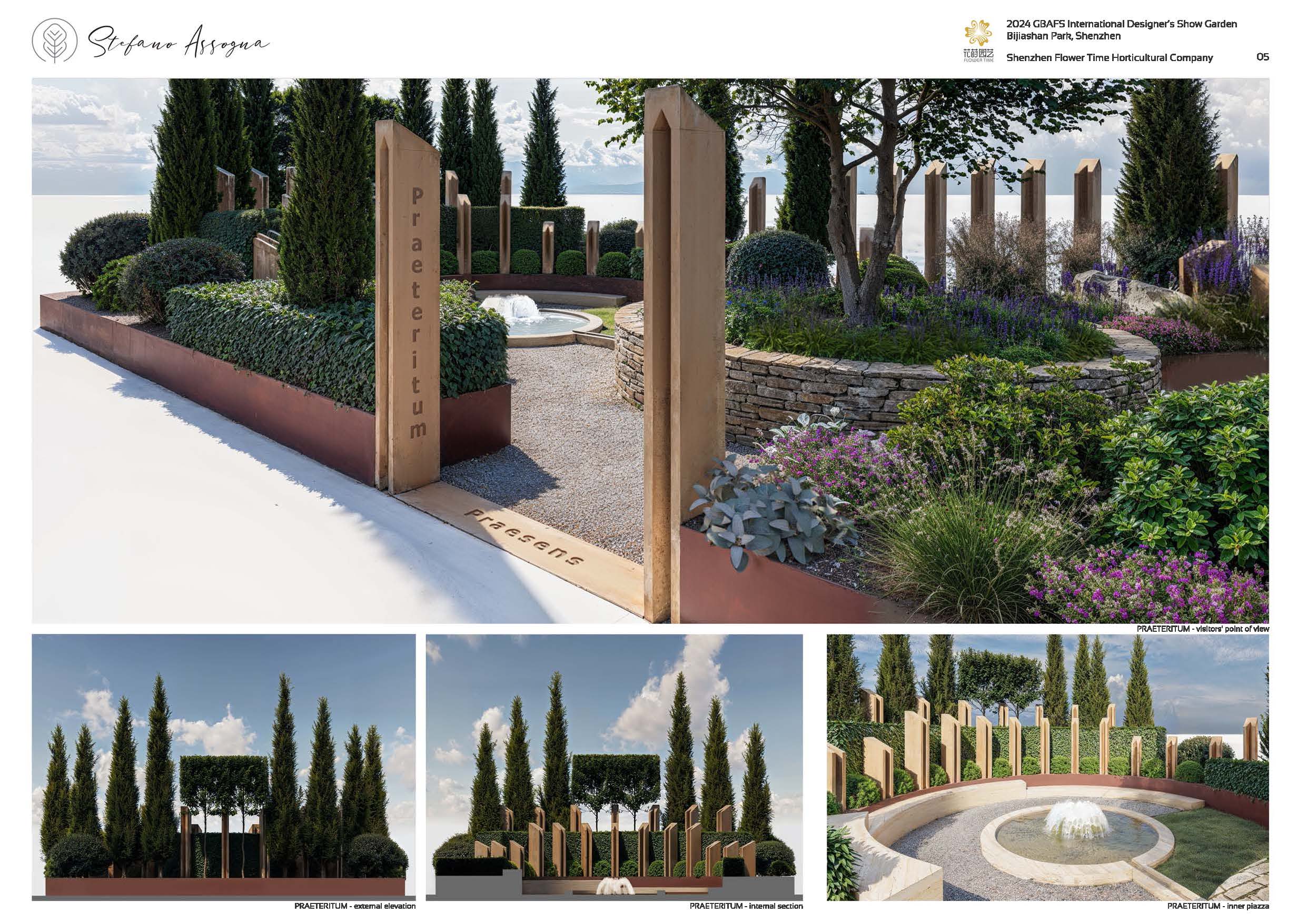
“Praeteritum et Futurum” was born as a temporal journey through the evolution of greenery within the historic urban fabric: while the city remained unchanged in its centuries-old geometric harmony—symbolized by the rigorous sequence of wooden pillars—the garden evolved to respond to climatic challenges.
A manifesto in which nature, observed and respected, became the bridge to reconnect man with vital rhythms, transforming ecological awareness into pure beauty.
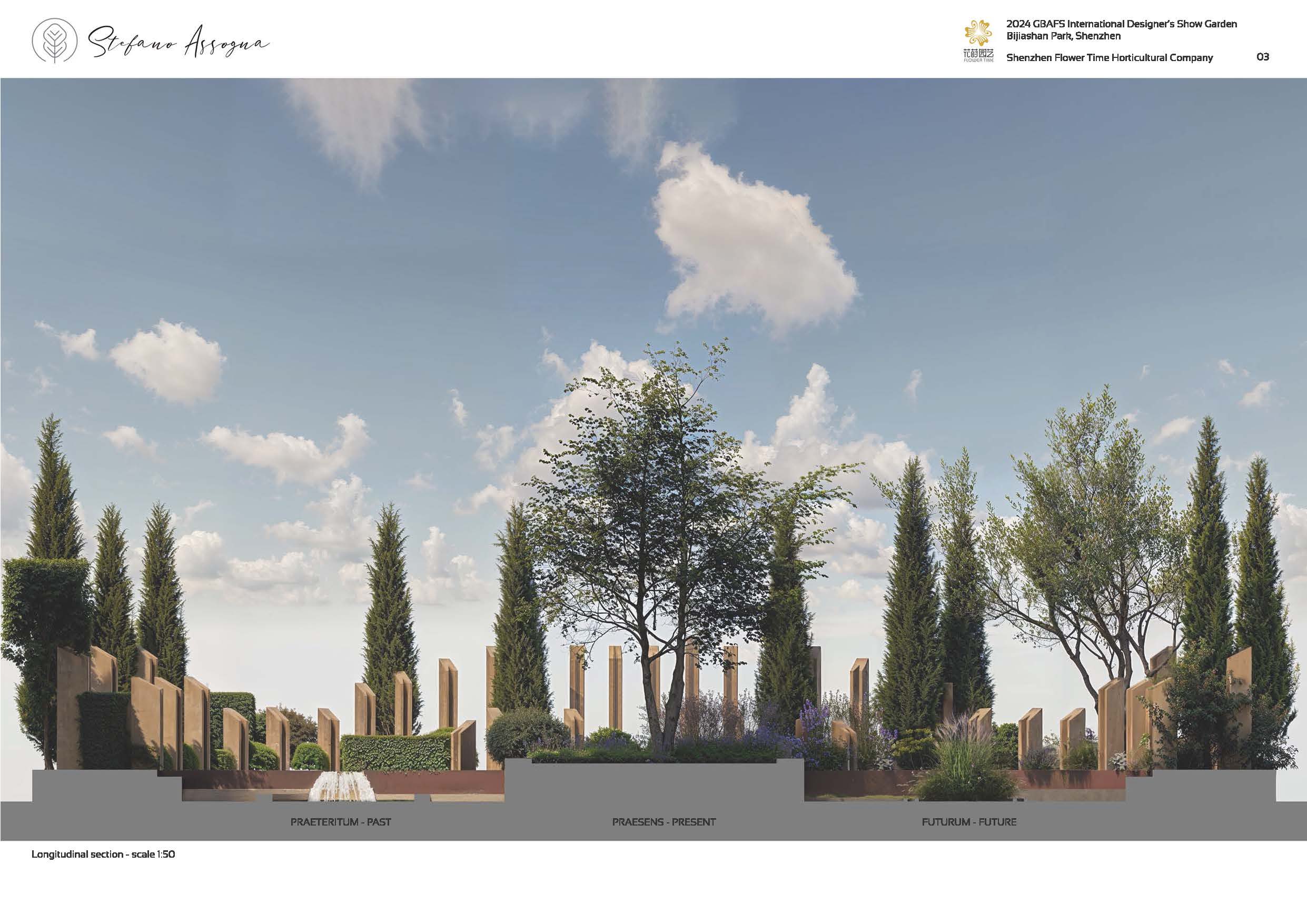
The narrative path begins in the sector named Praeteritum, or the Past. Here, to embody historical memory, we evoke the canons of the formal Renaissance garden: a place where man forged nature to his liking.
Plants are treated as static architectural elements, living sculptures imitating stone, to leave an indelible mark of control.
The presence of water and the widespread use of gravel—a typical element of historic walkways and squares—tell of an era when the priority was to define space with geometric rigor, in sharp contrast to today’s fluidity.
The transition between eras takes place under the canopy of a large centuries-old tree, a “wise spectator” witnessing the changing of forms.
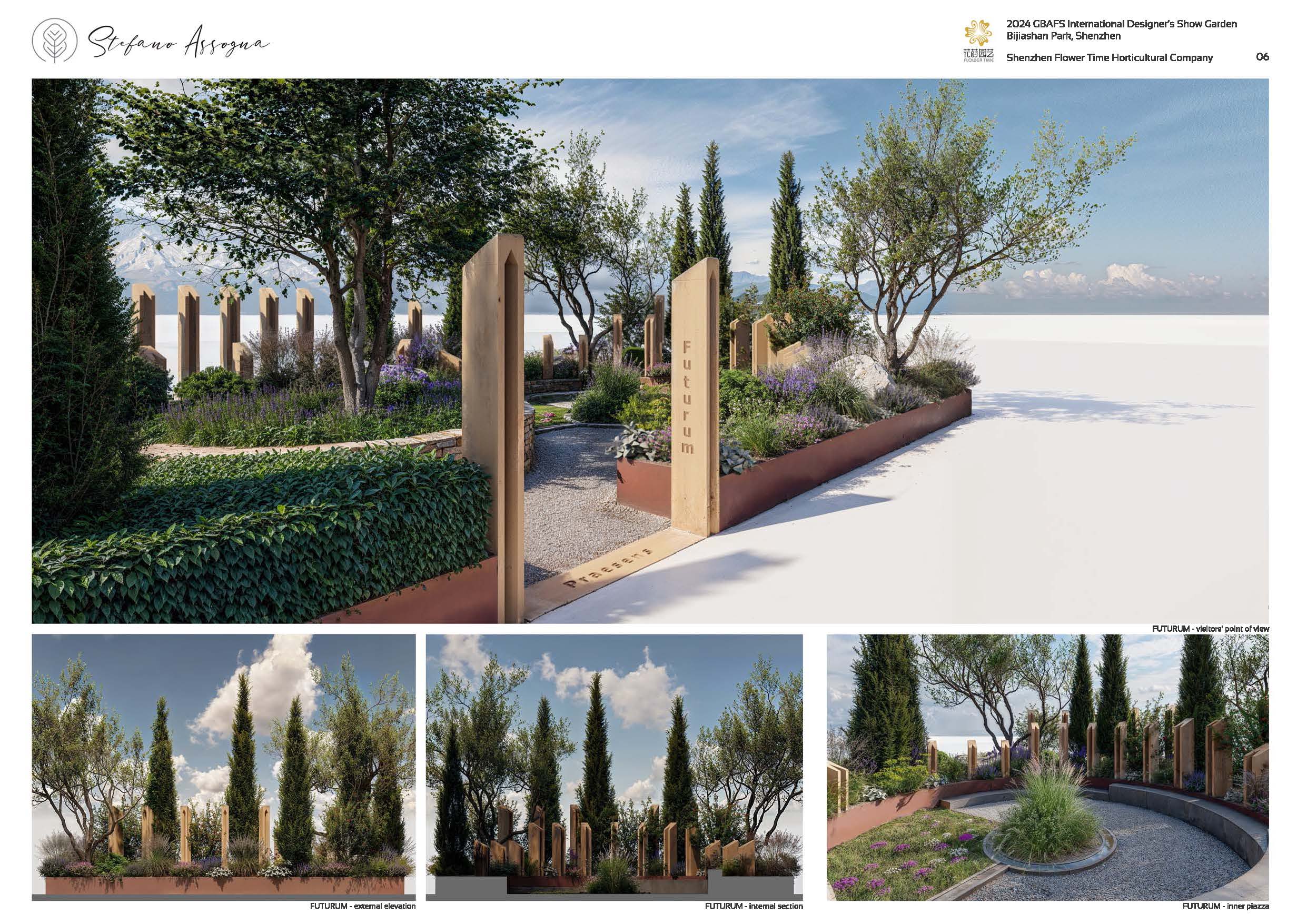
Crossing this living threshold, one enters the Futurum, where the paradigm is radically inverted. Here, rigid geometries give way to vibrant flowering meadows, and the simulation of Mediterranean ecosystems takes over.
In this section, the garden is no longer static decoration, but an organism rich in biodiversity, capable of thriving in modern cities and offering enormous environmental benefits.
Our stylistic signature is expressed through advanced planting design: we recreate small autonomous ecosystems, introducing species resistant to drought and climatic extremes.
The composition plays on a cultured contrast: the permanent structure of evergreen plants in formal shapes dialogues with the ephemeral lightness of herbaceous perennials and grasses, true symbols of the contemporary garden.
An invitation to discover how beauty can be born from sustainability and resilience.