
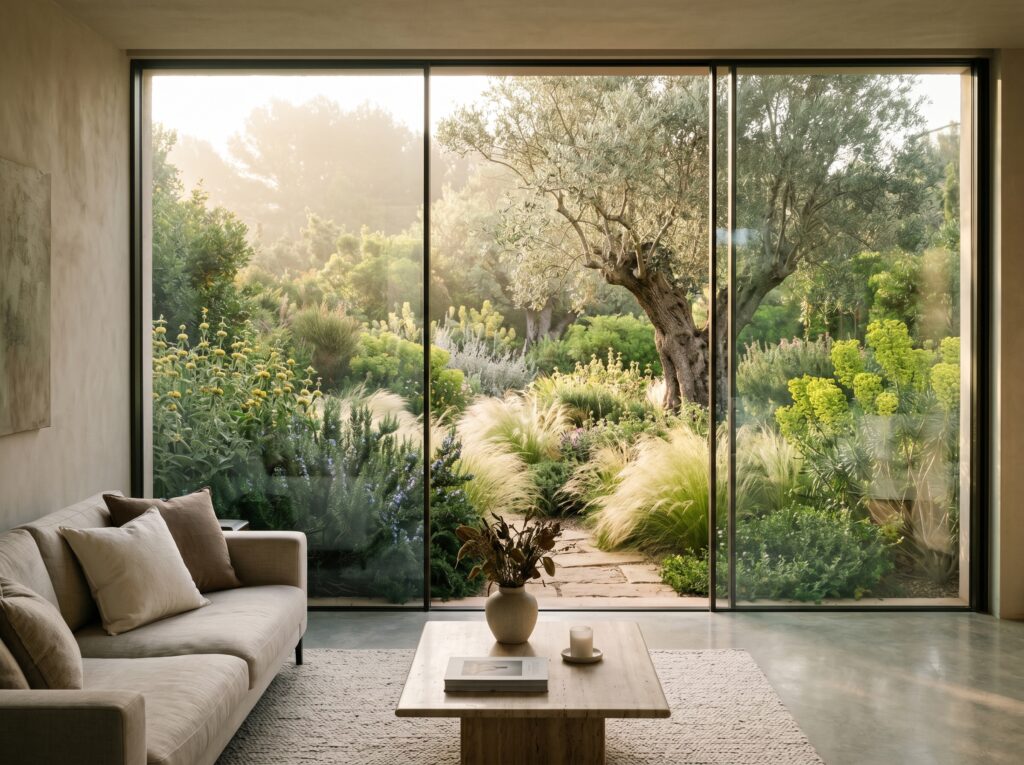
Why choose a naturalistic garden
The illusion of control: the landscape beyond inert matter
When preparing to design a garden, a completely understandable mental process rooted in common experience is often triggered: applying the same logic that governs interior architecture and design. When deciding the layout of a living room, the choice of materials is guided by a combination of personal taste, aesthetics, and functionality. The rigorous veins of precious marble are paired with the warmth of oak wood; fabrics are selected for their textures and colors, metals for their finishes. In that specific context, design takes shape as a purely spatial and compositional act. The materials used are, by their nature, unarmed and inert. Once put in place and installed following the designer’s drawing, they remain motionless, immutable, and crystallized in their original form for decades, preserving the initial vision intact.

However, when crossing the threshold into the outdoor environment and beginning to work with planting design—that is, design based on the vegetal element—this static and purely material approach inevitably reveals its profound limitations. The most widespread and persistent misunderstanding in the world of landscape design consists of considering plants as simple decorative elements, inert objects to be arranged in space to fill volumes or create splashes of color, ignoring their profound nature. Often, the garden’s design is chosen based exclusively on the aesthetics of a three-dimensional rendering. Nevertheless, ignoring biological dynamics and long-term management consequences is a design flaw. It means, in fact, disregarding the intrinsic nature of the living material being worked with. Plants are not furnishings; they are living organisms that breathe, move, grow in height and width, compete for light and water resources, and constantly interact with each other and the surrounding environment. The crucial question that we consider fundamental to ask in our studio before starting any design phase is not about the simple visual pleasantness of a botanical combination, but rather the full awareness of what that design will entail in terms of management, care, and resources in the years to come.
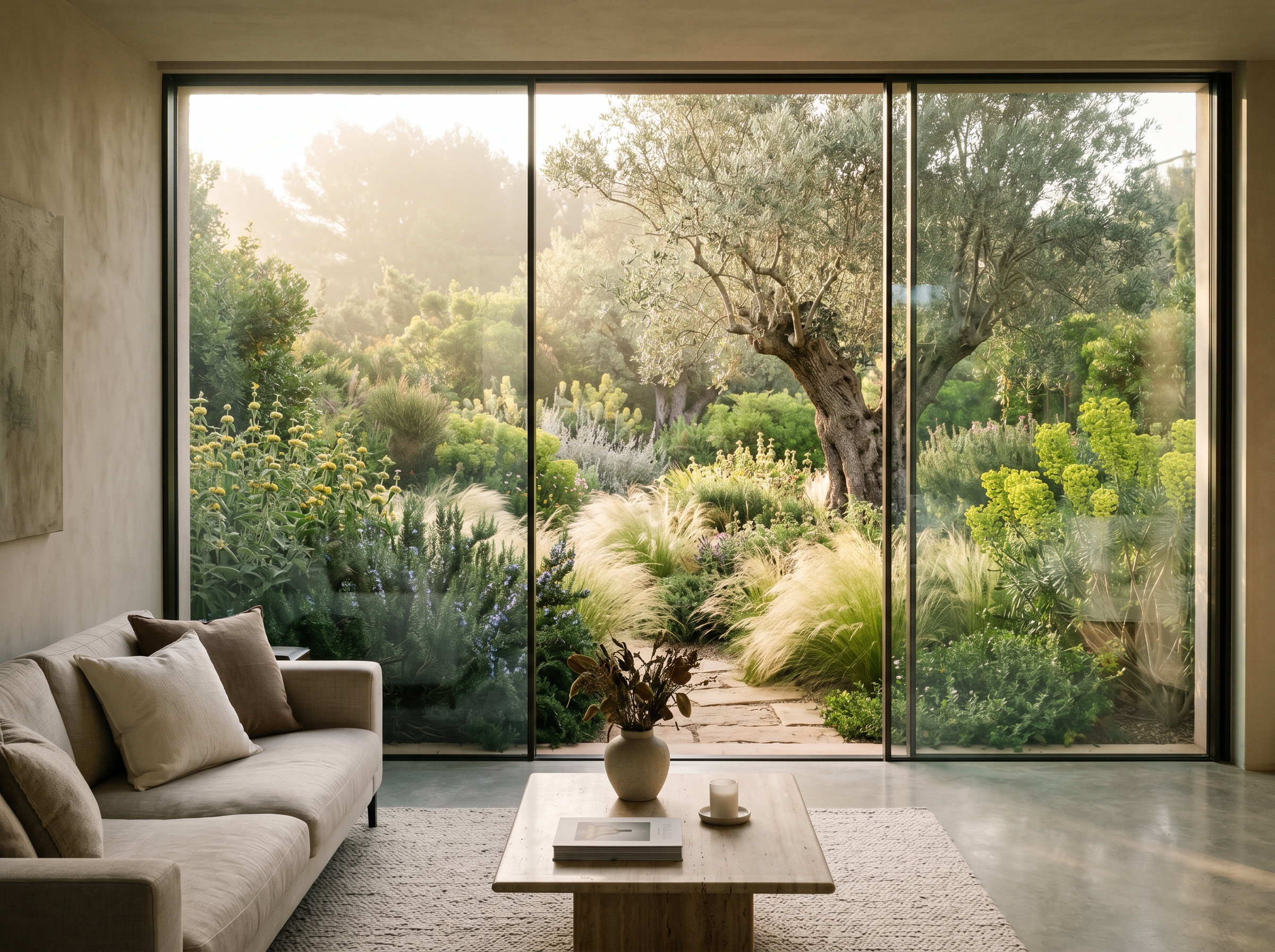
A concentrate of nature: the contemporary direction
Before proceeding with the detailed analysis of the various styles and approaches that dominate the landscape panorama, we consider it useful to propose a change of perspective. Our invitation is to look at the naturalistic garden with curiosity and openness, concretely evaluating its logic and extraordinary potential. With the knowledge we have gained today in the fields of ecology, applied botany, the functioning of plant communities (phytocenoses), and the delicate biological mechanisms that regulate the distribution, growth, and competition of plants in nature, this design direction no longer represents just one stylistic variation among many, but emerges as one of the most sensible, logical, ethical, and coherent choices for contemporary challenges. Our primary goal is to bring a true extract, a vibrant concentrate of nature into spaces, whether they be private, corporate, or public contexts.
Having started my personal career as a gardener, with my hands directly immersed in the earth, and then dedicating years to the academic, theoretical, and practical study of planting design until becoming a specialist and lecturer, I have developed over time a profound conviction that today guides our studio’s entire philosophy. We believe it is unthinkable to continue setting up gardens according to a past and obsolete conception, where plants are treated as isolated elements, disconnected from each other and from the real dynamics of the place. Let us look together at the most common stylistic alternatives on the market and the concrete commitments they entail, in order to offer the necessary tools to choose consciously.

The conventional garden: biological contrasts and forced coexistences
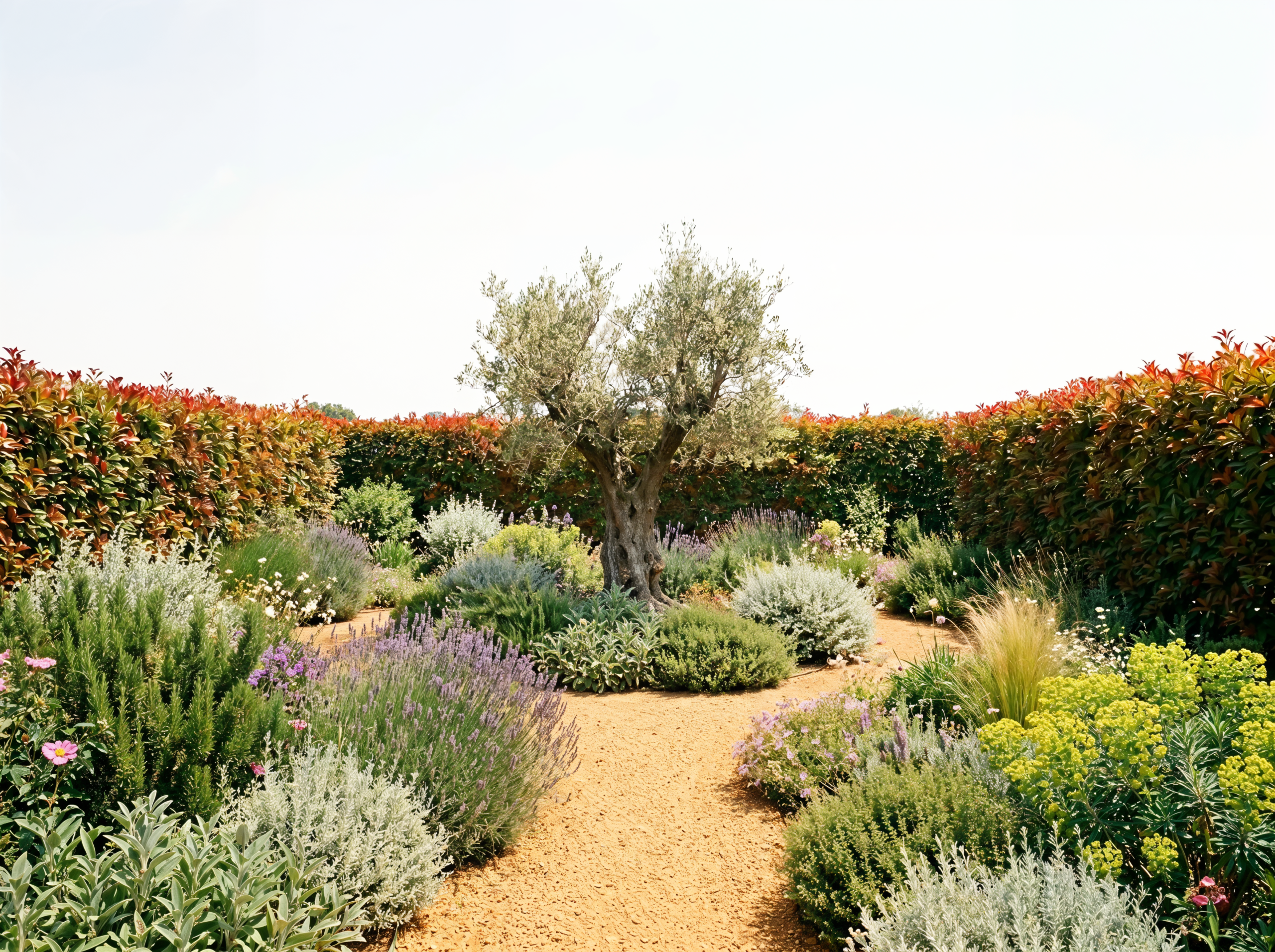
To understand the profound value of a system in equilibrium, it is useful to observe some classic setups that still dominate the residential landscape today and represent an approach from which we gently try to move away. A recurring example is the extensive, monochromatic lawn which, requiring high water and chemical maintenance, often ends up thinning, yellowing, or degrading due to inadequate management or climatic stress. At the center of this turf, a majestic secular olive tree is often placed, perhaps surrounded by a geometric hedge of photinia or cherry laurel. To complete the picture, a mulch of white Carrara marble pebbles, or similar materials, is often found, creating a strong and artificial color contrast.
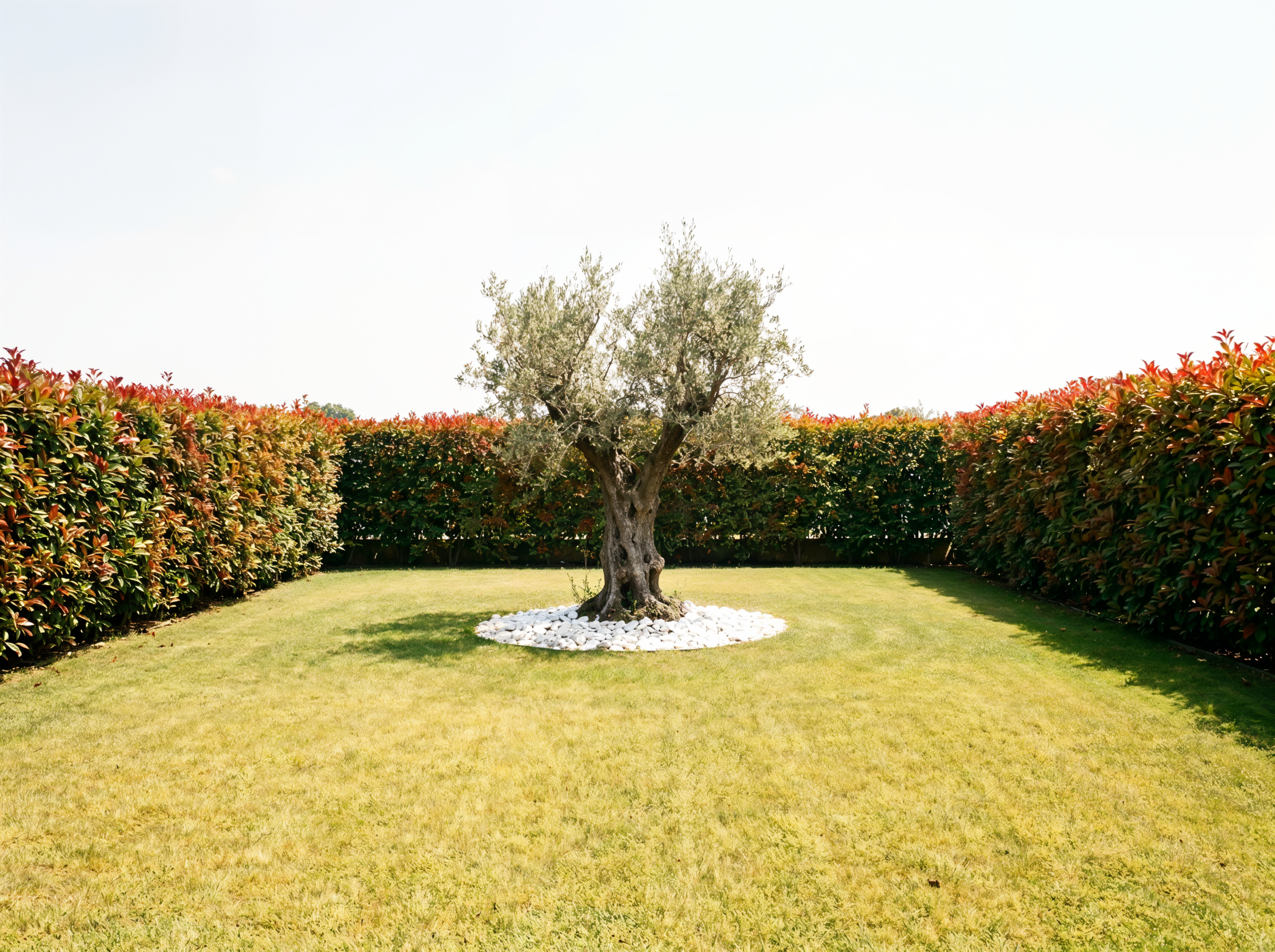
This type of image, although widespread and sometimes appreciated for its initial cleanliness, helps us reflect on the biological contrasts we often force into existence. We are faced with plants with diametrically opposed water, soil, and climatic needs, forced to coexist in the same space. The secular olive tree, a plant that evolved to withstand torrid and dry summers, suffers the constant, shallow irrigation required by the lawn, creating stress conditions that can, in the long term, compromise its health. Furthermore, there is an almost total absence of plant biodiversity, replaced by fragile monocultures. Moving as far away as possible from this setup means understanding the real meaning of the garden; it means taking a useful step towards the creation of a space that is truly in harmony with the natural dynamics of the place and the reference climate.
Monospecific minimalism: nature treated as inert matter
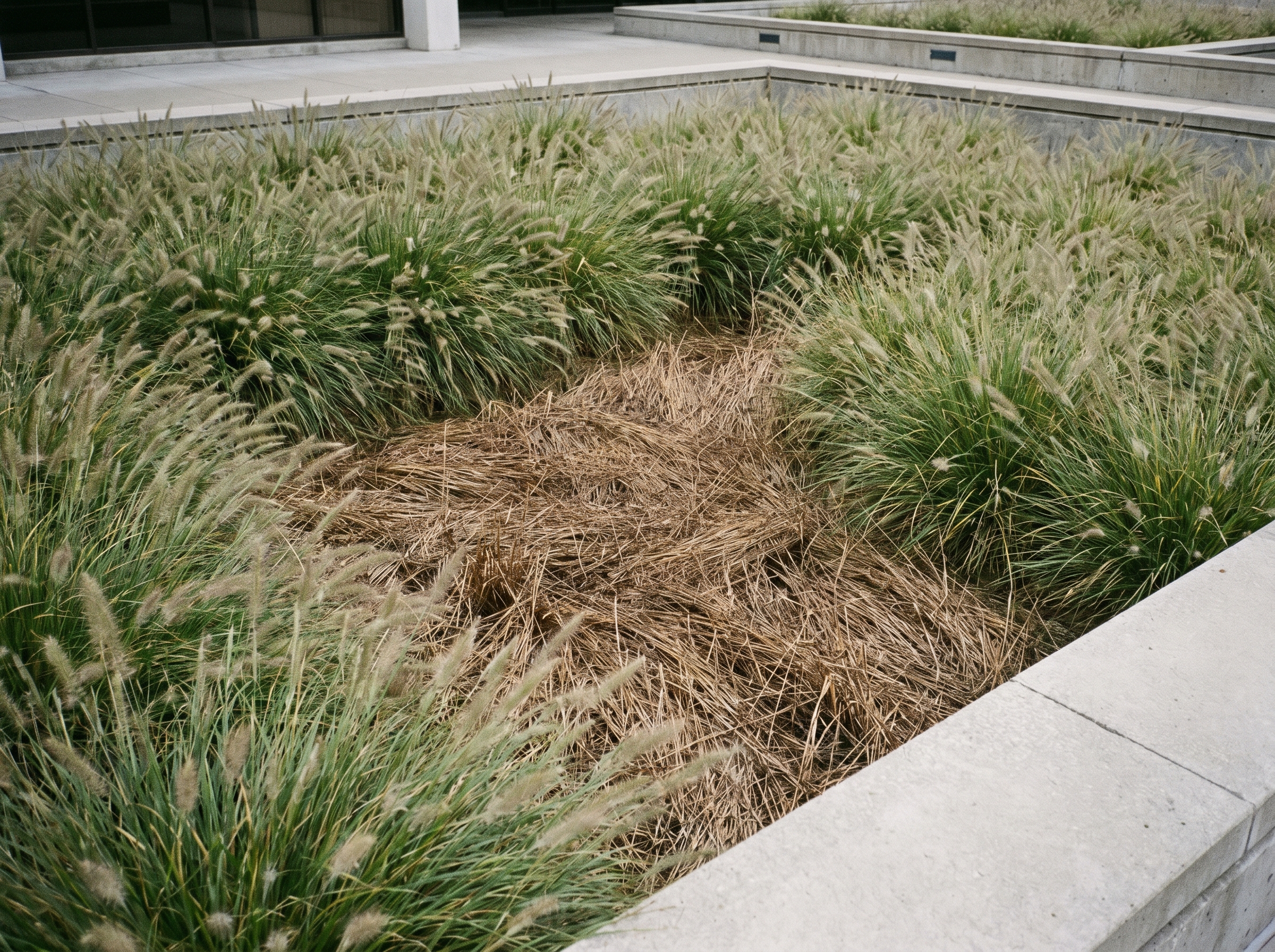
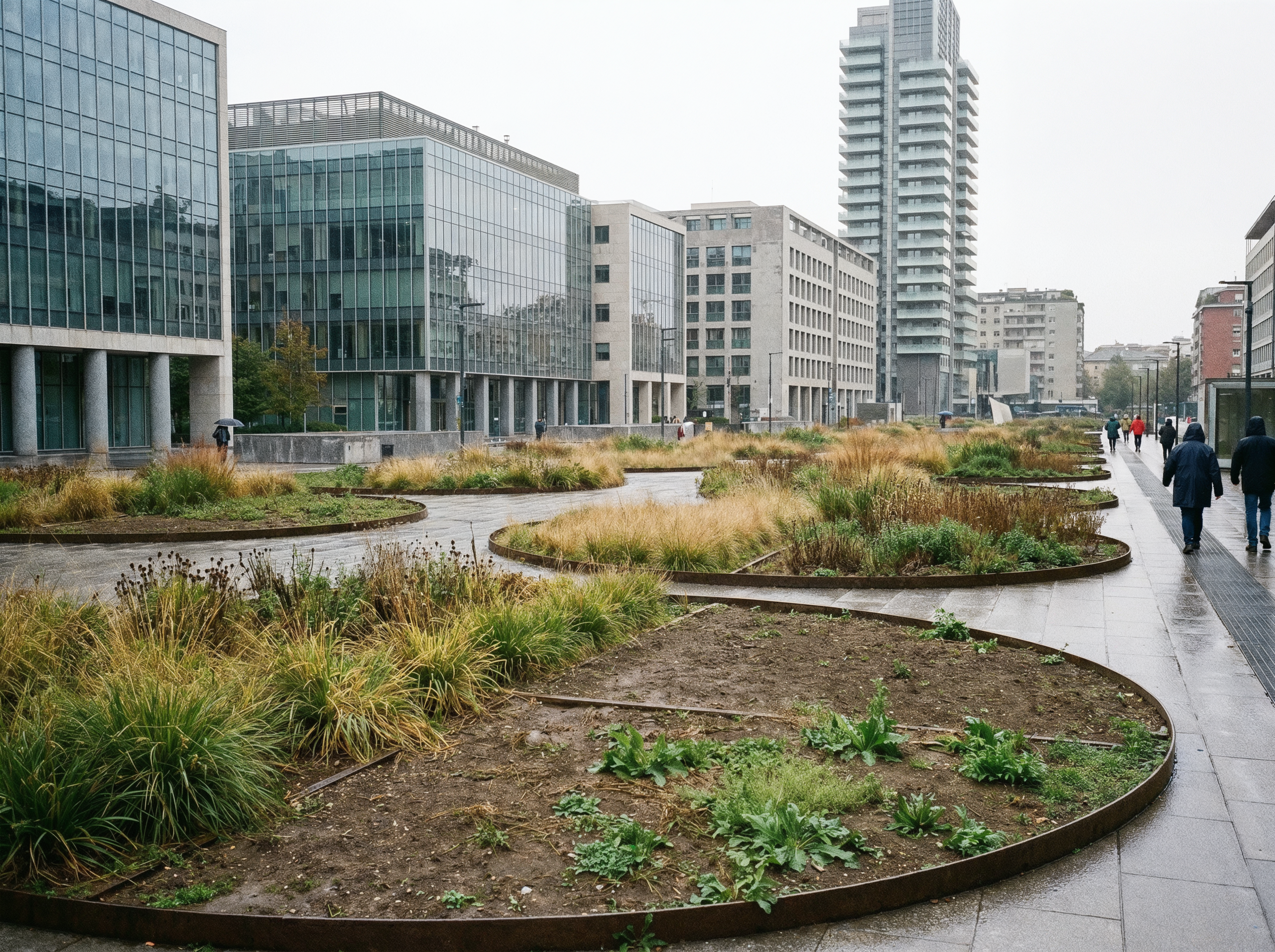
Another very common expression of contemporary design, often associated with modern architecture, is extreme minimalism applied to planting. There are projects with undeniably rigorous and fascinating designs, yet based on the use of very few botanical species; sometimes it is a single ornamental grass spread over large areas, or geometric masses of a single shrub. This style, appreciated for its pure lines and immediate readability, nevertheless presents intrinsic vulnerabilities. In these cases, the garden is treated, or continues to be treated, in the same way as any design element, as if it were something whose shape, features, colors, and texture could be chosen exclusively, in a completely immaterial way disconnected from biology.
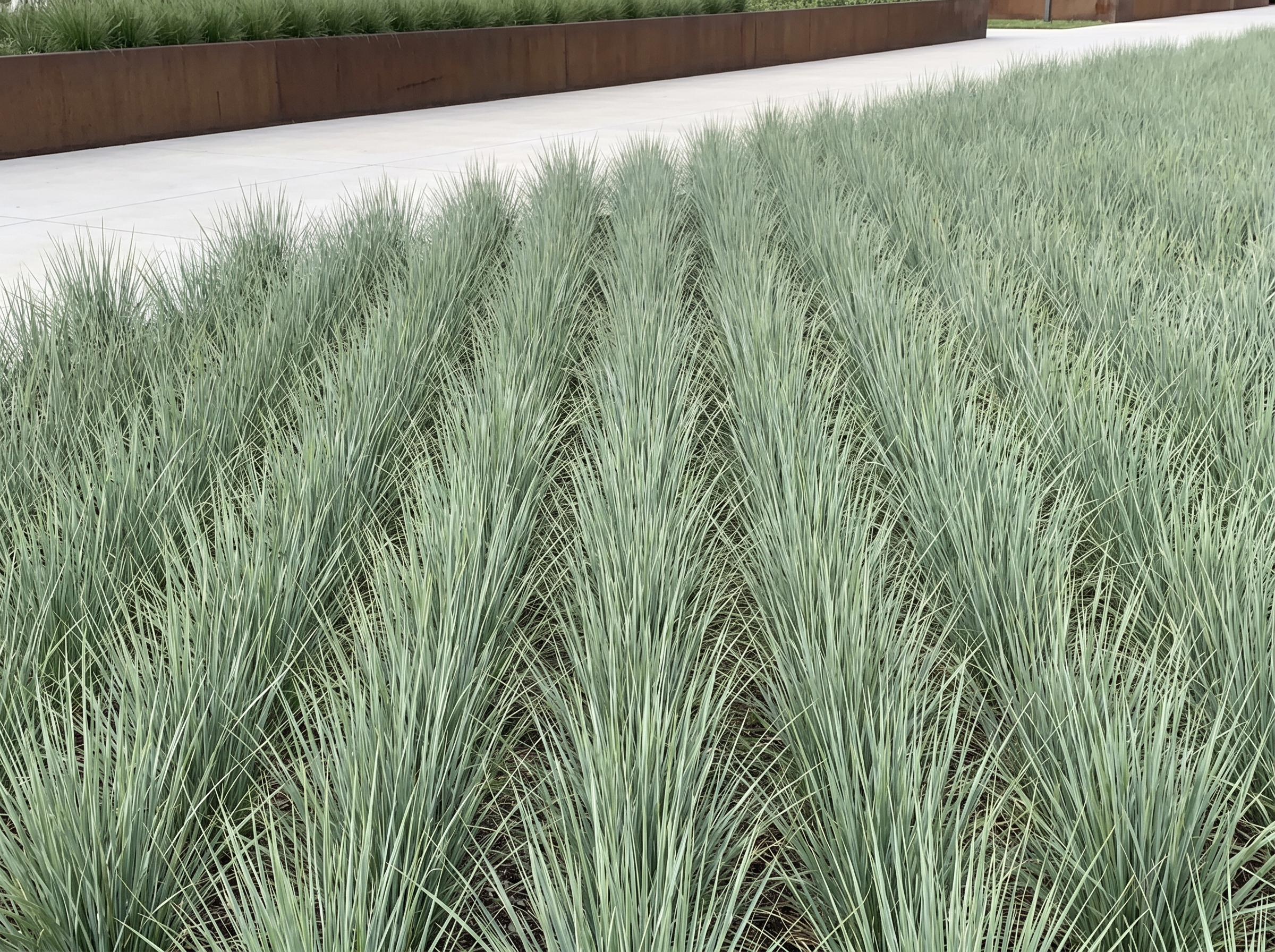
When used en masse, these plants offer an immediate and reassuring visual impact, but they hide a certain management fragility. A system based on only one or two species is biologically weak and unstable. In the event of an adverse climate year, excess water, or the arrival of a specific pathogen, the entire scenario is heavily and simultaneously affected. One finds oneself having to manage extensive treatment programs to try to save the design’s integrity, or, in extreme cases, having to replace a large part of the plants. It is a design that privileges geometric aesthetics and monoculture, requiring constant and invasive control so as not to lose the visual integrity required by the project.
The English mixed border: human commitment, expense, and romanticism
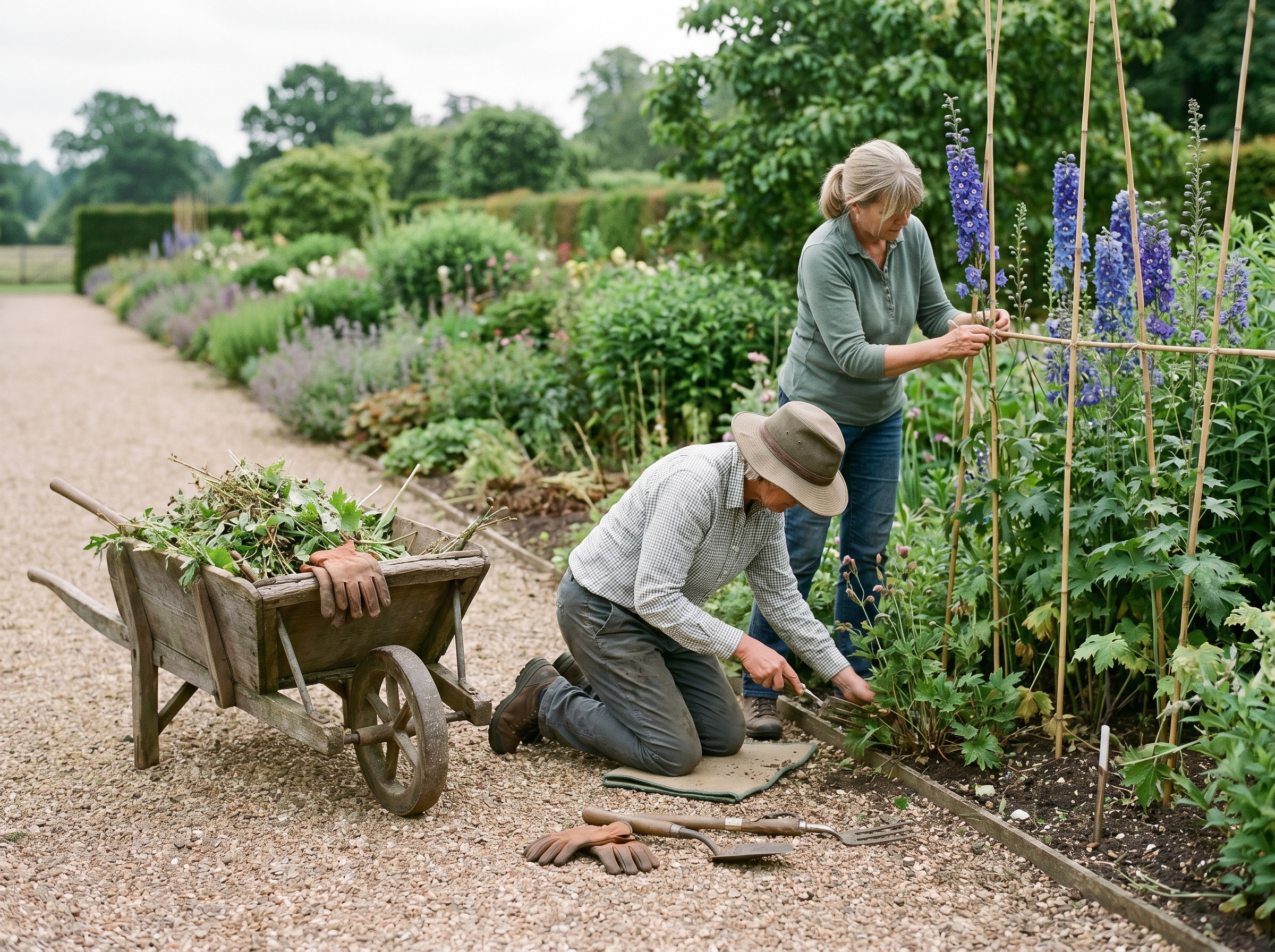
Looking back at the rich history of gardening, we encounter the famous English mixed border, a classic alternative that has set the standard worldwide. This compositional style is aesthetically lush, romantic, rich in colors, shapes, and scents, and extraordinarily enchanting to admire during peak blooming periods. The study of colors and heights creates scenographies of undeniable charm and elegance.
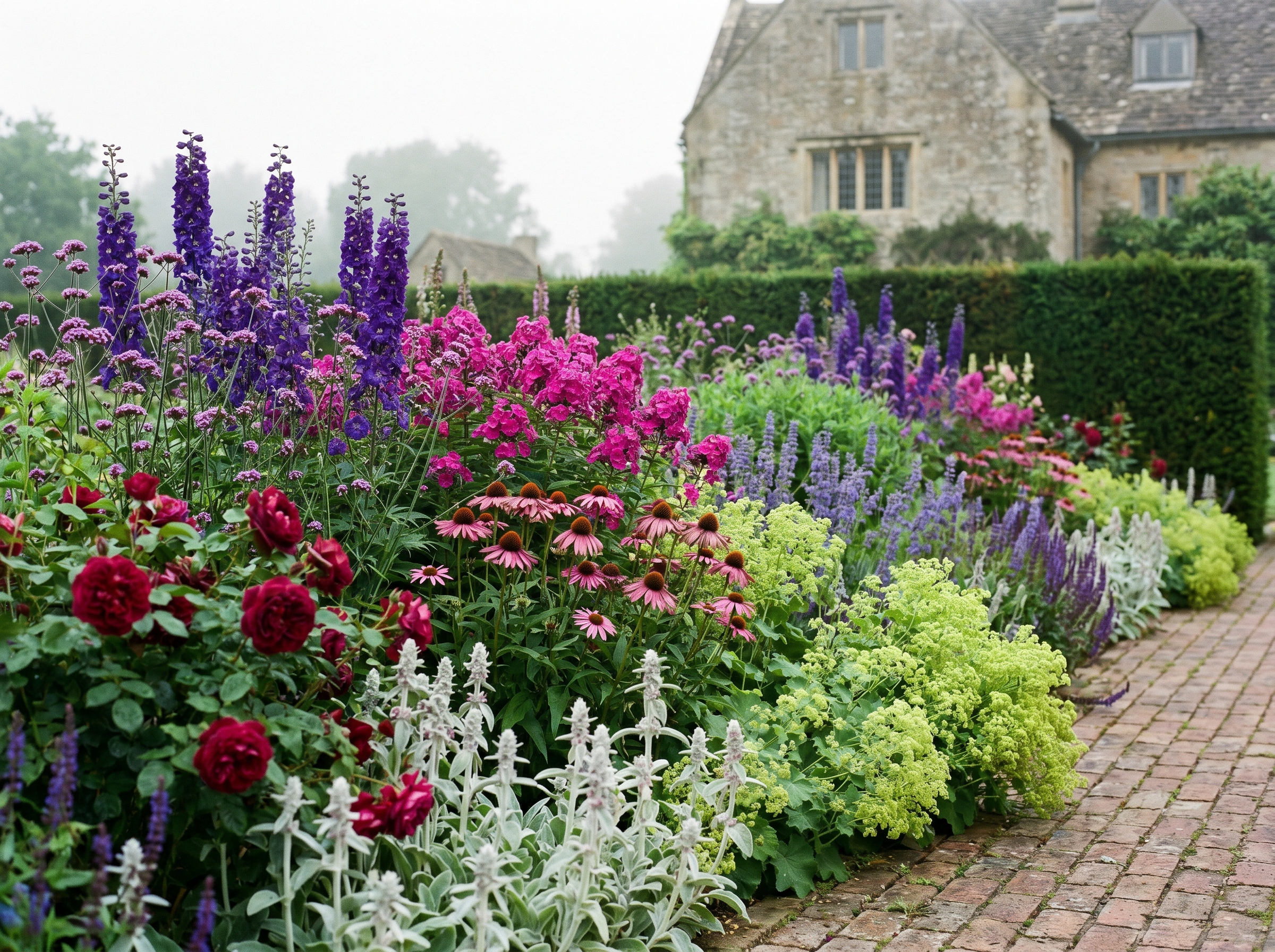
However, we believe it is necessary to simply and objectively mention the immense human and financial commitment it entails. It is absolutely ethical, correct, and sacrosanct that in famous English gardens, historical or contemporary, there is qualified and regularly salaried staff to constantly manage this complex form of garden. Working the soil, dividing perennial plants punctually, adding organic matter, hoeing, pruning, staking the tallest stems, and tending to every single faded flower requires continuous, meticulous, and uninterrupted attention. It is a fascinating and noble design choice, but one that inevitably translates into very expensive management and a constant need for human resources for its maintenance—a model rarely compatible with the needs, time, and resources of a modern private client.
Block Planting: the architecture of volumes, costs, and botanical impressionism
The most recent evolution in the international landscape panorama, brought to the forefront and made famous in recent decades by renowned Northern European designers like Piet Oudolf, is the so-called block planting. In this style, splendid perennials and ornamental grasses are used, but arranged in large blocks, monospecific patches, or highly distinct chromatic “drifts.” It is a design that provides an idea of stylized, modern, and contemporary nature, while maintaining a very clear and reassuring architectural and volumetric readability for the eye.
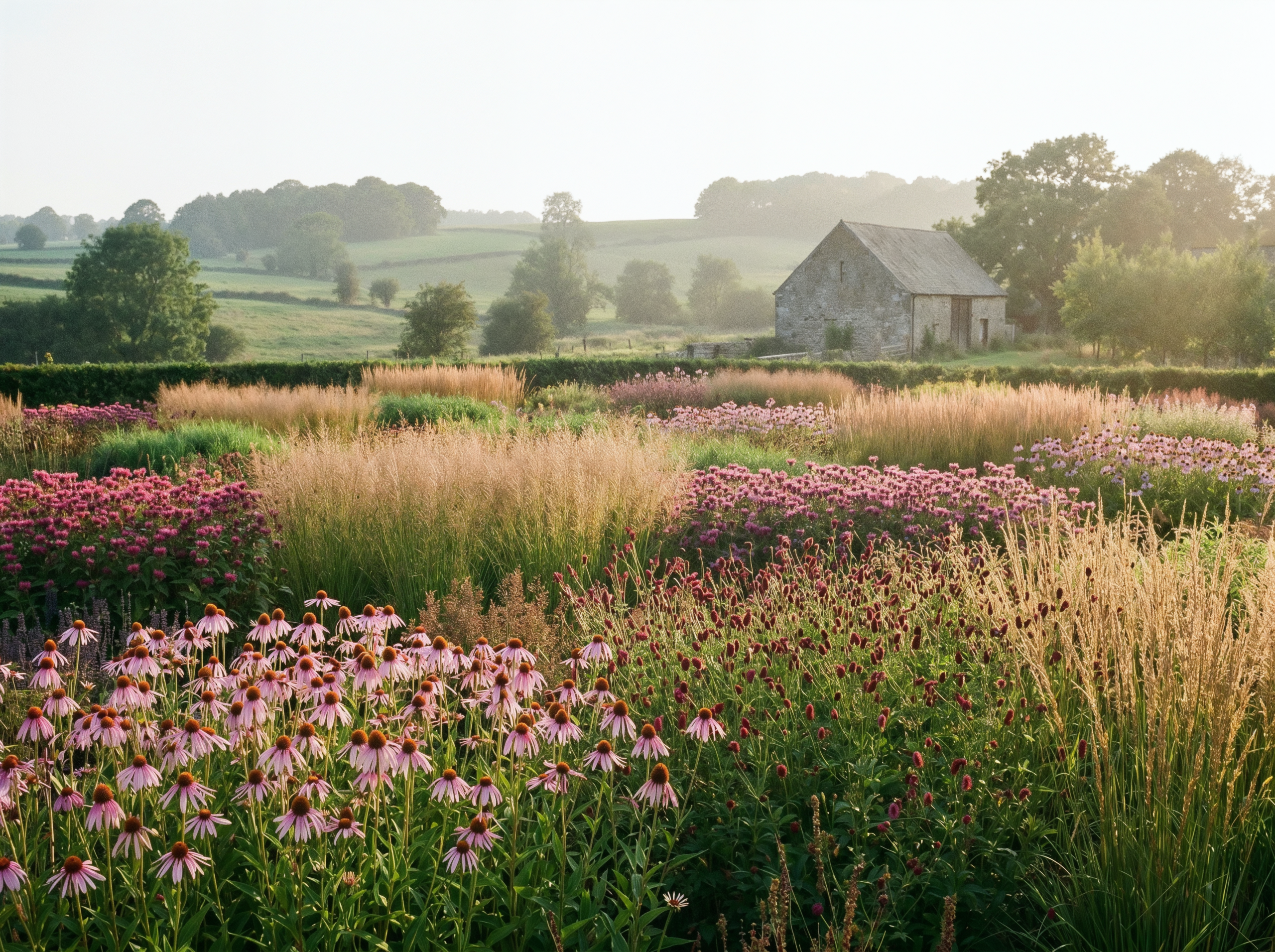
If we question the evolution of this design over time, we must analyze its dynamics with botanical realism. Should problems arise with the botanical species that makes up an entire block, due to a pathogen, excess water, or an anomalous climatic year, a glaring void would be created—a visual and ecological “hole” in the heart of the composition. Unwanted spontaneous weeds would quickly and inevitably settle in that void of bare earth. Management costs always remain very high, almost on par with an English border, due to the incessant activity required to maintain the design over the years (unlike a naturalistic garden) and the need to purchase new plants to restore any lost blocks. Furthermore, this approach almost completely ignores the delicate mechanisms underlying plant communities (phytocenoses). Plants are used exclusively as large splashes of color to be placed side by side or contrasted, just as if the garden were a painting. It is, to all intents and purposes, an impressionistic form of gardening: visually extraordinary at a given moment, but biologically simplified, where management commitment and economic resources remain primary factors to be considered with great attention.
The naturalistic garden: the simulation of natural dynamics
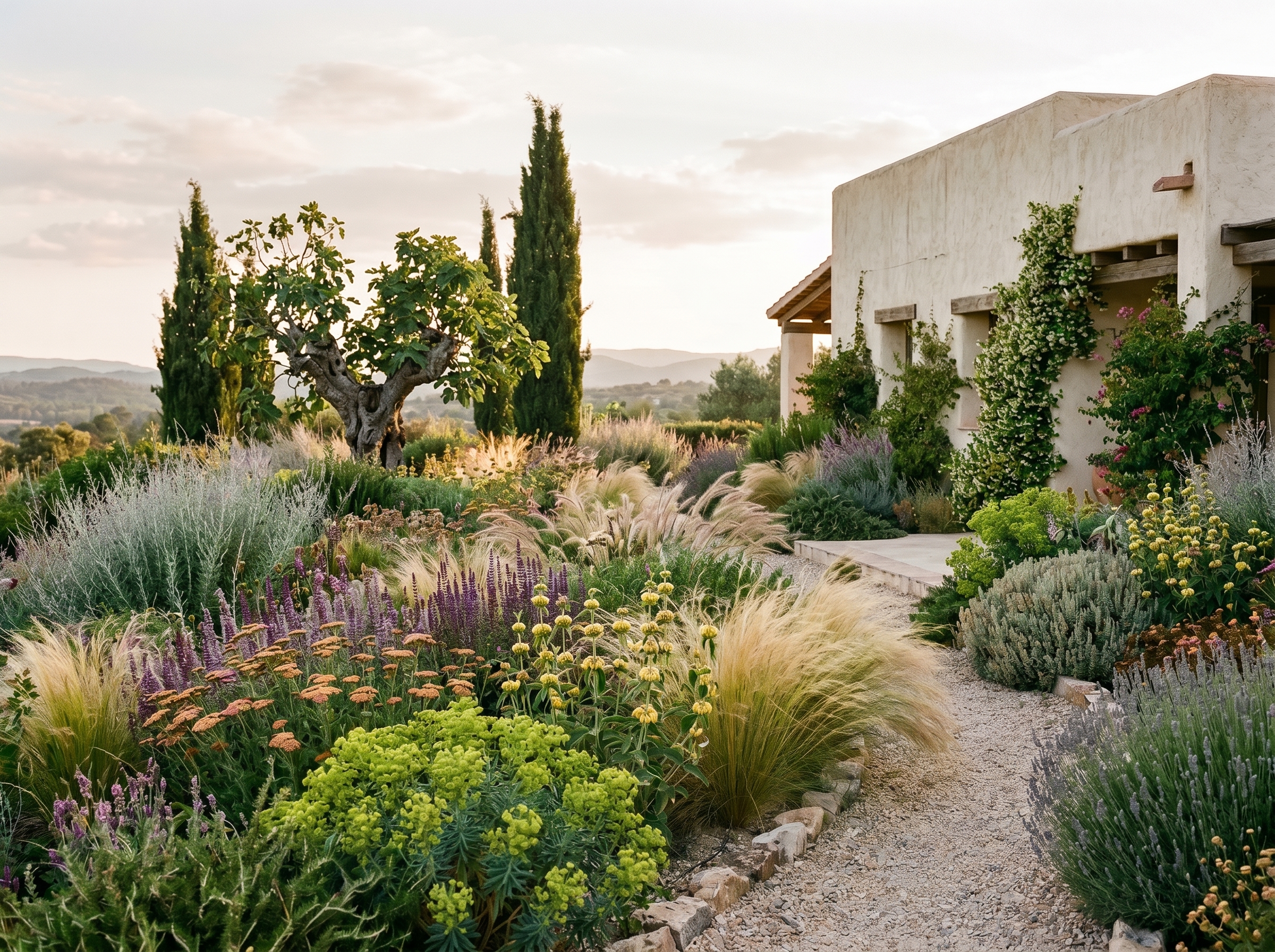
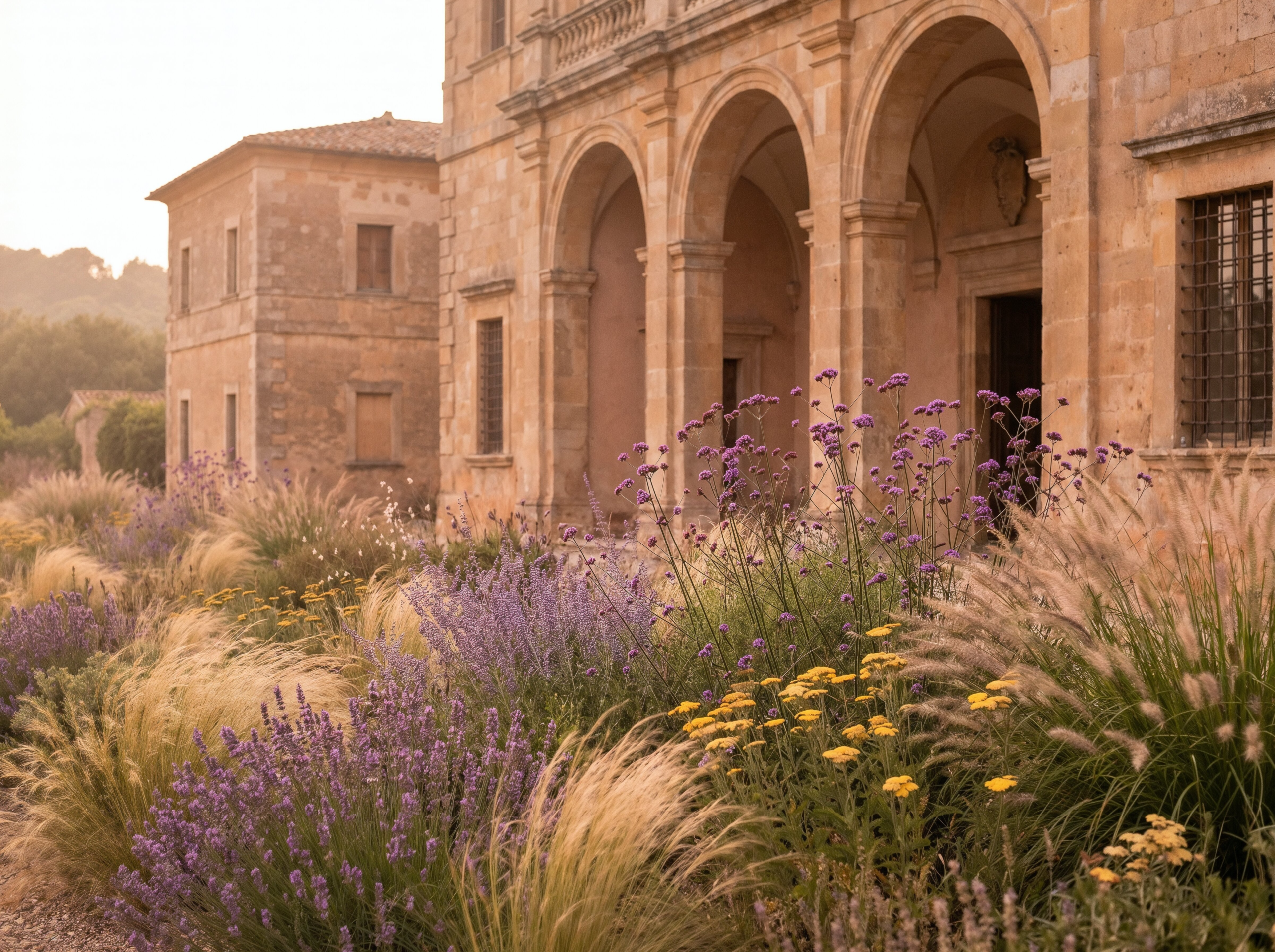
We thus arrive at a form of design that blends aesthetics, applied ecology, and management sustainability: the naturalistic garden. We believe it is important to clarify that the intent is not to faithfully reproduce an uncontaminated ecosystem, but to aim for the creation of an artificial ecosystem, which simulates natural mechanisms with great accuracy and scientific knowledge. In this approach, plants are not arranged in closed blocks, separate masses, or geometric rows, but mixed and distributed on the ground following highly precise compositional rules, forming true interconnected, stratified, and complex plant communities.
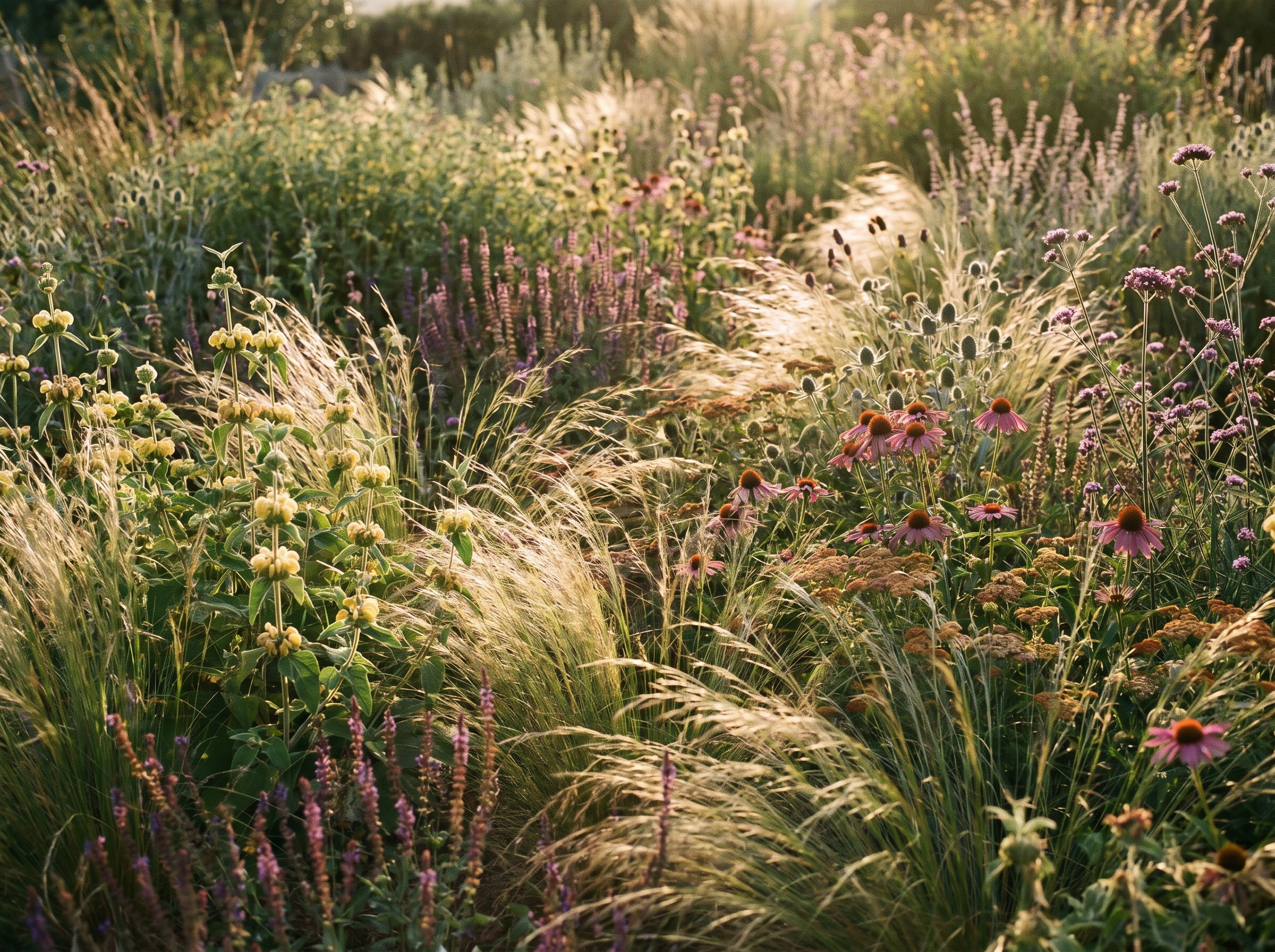
In this botanical stratification, we assign a specific role to each plant. We use structural plants, shrubs, or tall grasses, to define the permanent framework and winter readability; design plants for touches of color and overall character; matrix plants with neutral tones and subtle textures to softly unify the entire composition; and, finally, groundcover and filler plants to seal the soil. The great virtue of this garden form lies in its adaptability and resilience. Because the species are densely mixed and interconnected, if one or more species should fail or suffer over the years, we will never need to intervene with costly and urgent replacements. The neighboring, vigorous, and healthy species will tend to expand gently, fluidly filling the vacated space. The design evolves, transforms over time, and, if well designed and managed, preserves its ecosystemic integrity intact. This approach proves extremely valuable even in historical and classical contexts. We believe, in fact, that there is a need to carefully evaluate the possibility of replacing, in whole or in part, the old geometric layouts of historical gardens with naturalistic matrix components. It is desirable that the bodies responsible for landscape protection, such as the Superintendencies, also progressively adapt to the stringent ecological and economic needs of the present, allowing the introduction of more sustainable management practices that can still elegantly respect, enhance, and dialogue with historical architectures.
Underground engineering: multi-cycle communities and soil biology
The management, botanical, and aesthetic advantages of this style also develop profoundly beneath the soil’s surface. By designing “multi-cycle” communities, we introduce species that have vegetative phases, blooms, and active root systems in diametrically different periods of the year, staggered from one another. This translates into profound fidelity in simulating natural mechanisms, partially recreating those fertility conditions observed in spontaneous ecosystems. We will always have active root systems underground in every season. These roots, in their life cycle, constantly stimulate and feed the complex soil food web, nourishing microorganisms and keeping soil biology intact.
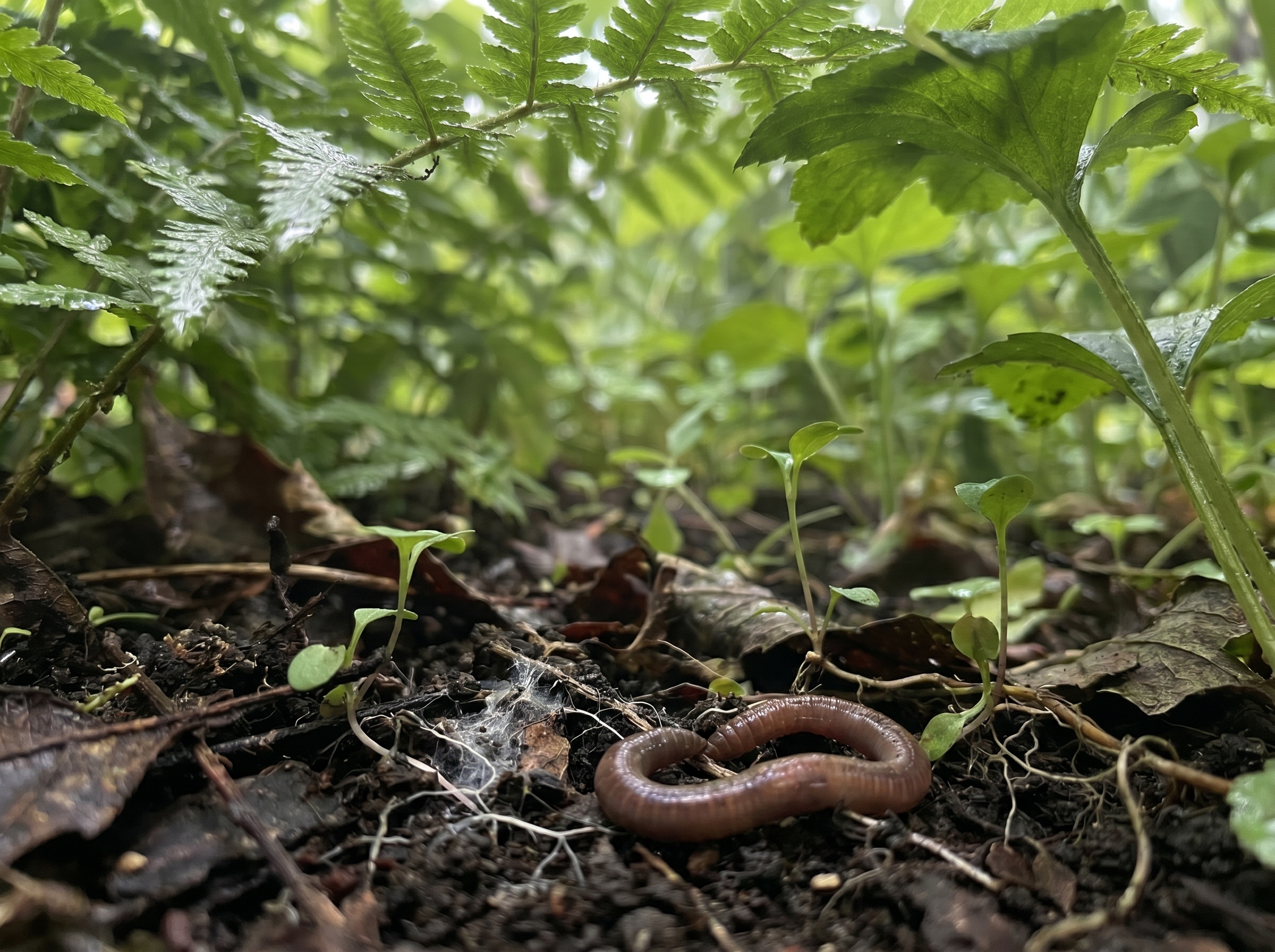
The dense vegetative cover carpets the surface, reducing the emergence of unwanted weeds to almost zero. Aerial diversity maximizes biodiversity, attracting beneficial insects that act as a natural biological shield against pests. In this regard, in the naturalistic garden, it is important to reiterate an absolutely foundational and indispensable principle: synthetic chemical fertilizers are never used, nor are phytosanitary treatments ever carried out. The planting finds its own equilibrium, quenching its thirst and nourishing itself autonomously thanks to active root communities and the layer of protective natural mulch. The interconnected canopies defend the soil from direct evaporation, drastically reducing water consumption. And all this happens without any pedantic purism: nature is pure adaptation, and we use both native plants and species from similar climates (clearly non-invasive ones) to achieve maximum beauty and resistance.

The authenticity of the contemporary landscape
Choosing how to set up one’s outdoor spaces represents a decision that goes far beyond the pure and momentary visual aesthetics of a rendering. It is about deeply understanding the behavior of the living matter being worked with and evaluating with the utmost attention the commitment, time, and resources that each style will require in the years to come for its correct maintenance.
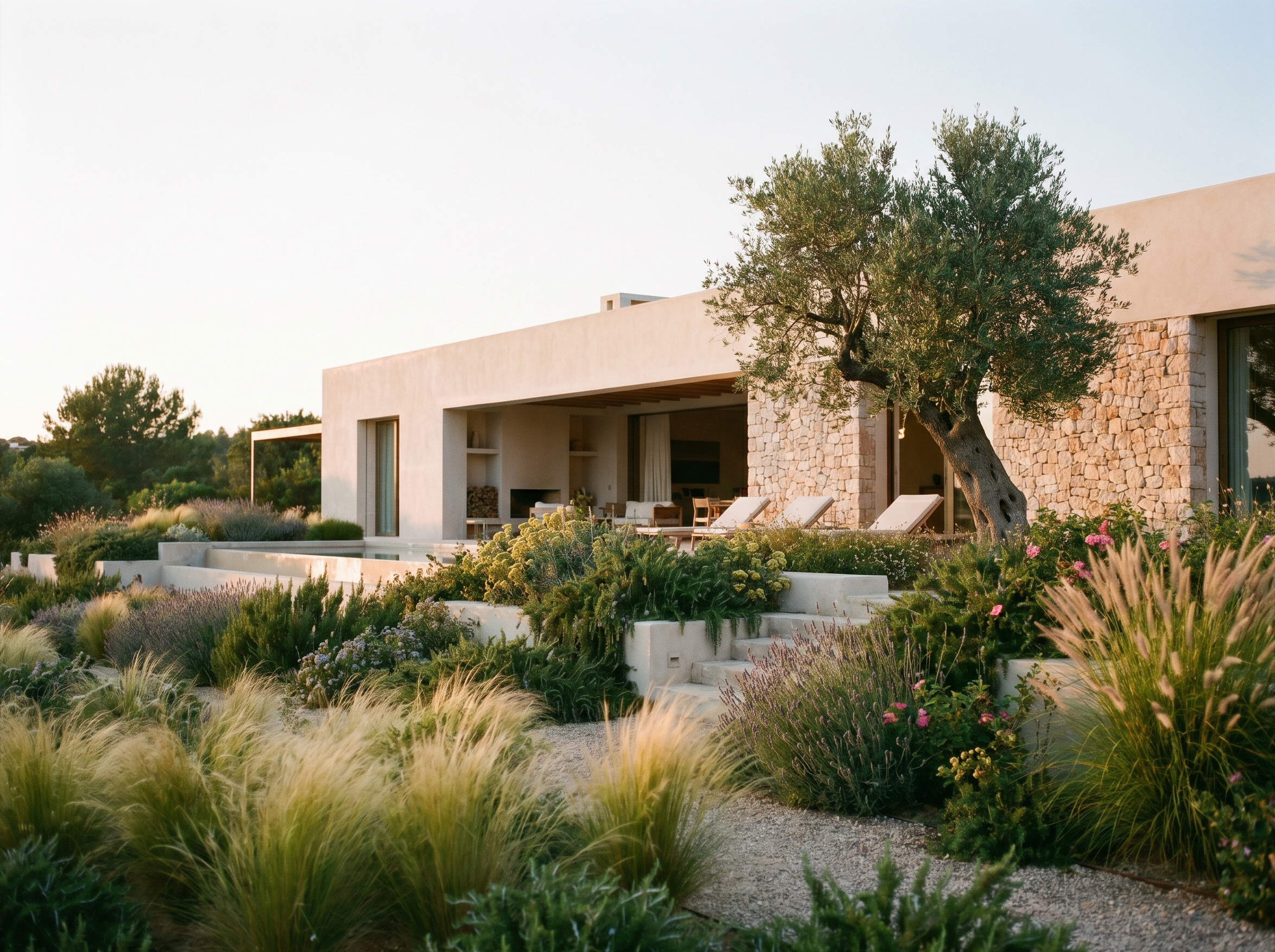
Guiding towards the choice of a naturalistic garden means inviting an investment in a space that seeks biological stability and equilibrium. An artificial ecosystem designed to accompany human architectures with grace and elegance, drastically reducing water and maintenance needs without ever giving up the care and attention that every living being requires and deserves. It is a contemporary design approach that returns a profoundly authentic image, freed from the forced constraints and discomforts of the past, capable of evolving and offering a proud, dynamic, refined, and coherent beauty, season after season.